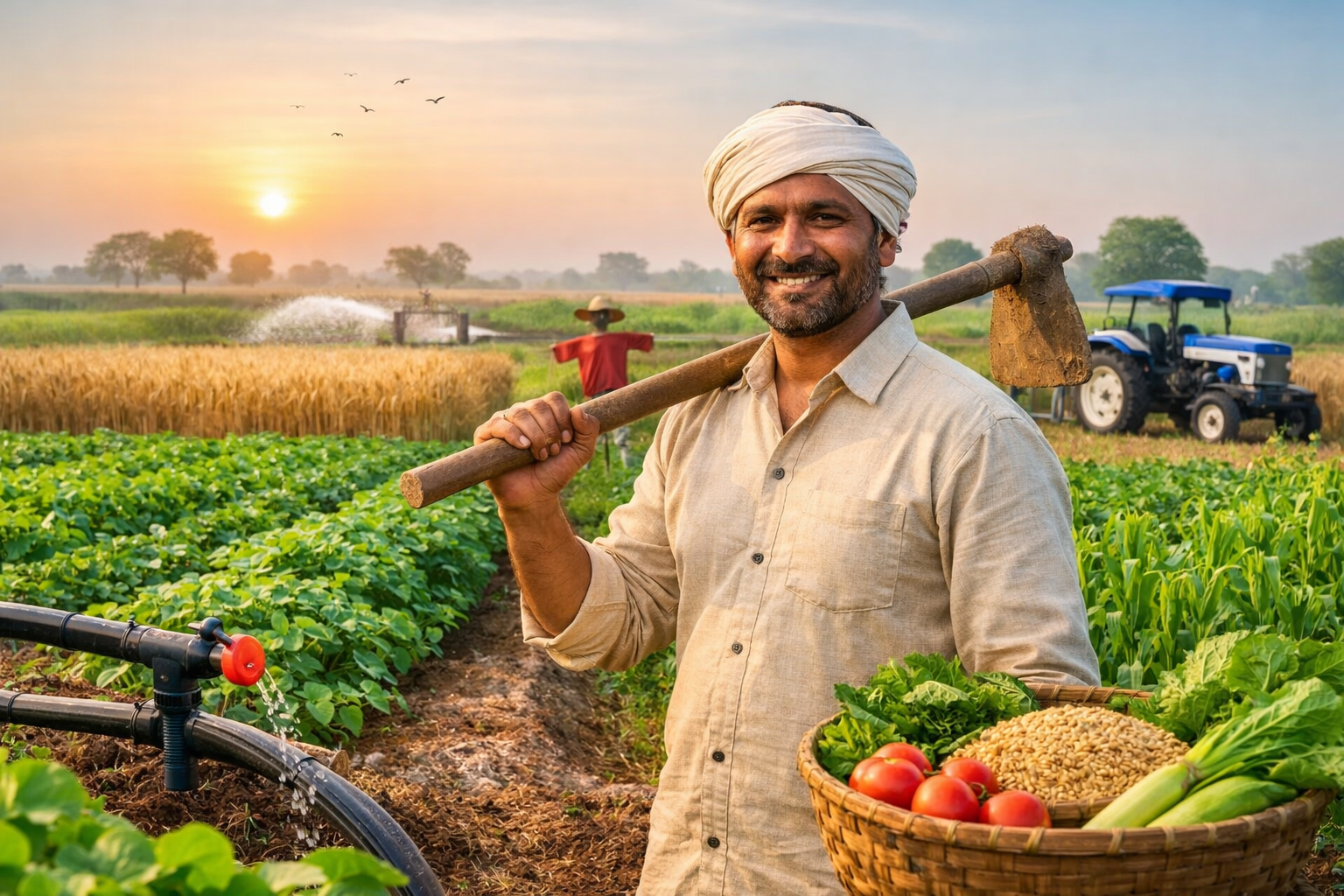
Agriculture has always been the backbone of rural livelihoods. However, changing climate conditions, rising input costs, and decreasing land availability have made traditional farming methods less effective. Modern farming practices focus on improving productivity, protecting soil health, conserving water, and increasing farmers’ income. By adopting these practices, farmers can achieve sustainable and profitable farming.
1. Crop Rotation for Healthy Soil
Crop rotation means growing different crops on the same land in different seasons. Continuous cultivation of a single crop reduces soil nutrients and increases pest attacks.
Benefits of Crop Rotation:
- Improves soil fertility
- Reduces pest and disease problems
- Enhances crop yield
- Maintains soil structure
Example:
Growing legumes after cereals helps replenish nitrogen in the soil naturally.
2. Efficient Use of Water Resources
Water management is one of the most important aspects of modern farming. Over-irrigation wastes water and damages soil health.
Modern Water Management Practices:
- Drip irrigation for vegetables and fruit crops
- Sprinkler irrigation for field crops
- Mulching to reduce evaporation
- Rainwater harvesting for groundwater recharge
Efficient irrigation ensures crops get the right amount of water at the right time.
3. Balanced Use of Fertilizers
Modern farming emphasizes balanced nutrient application instead of excessive fertilizer use. Both underuse and overuse of fertilizers can harm crops and soil.
Best Fertilizer Practices:
- Soil testing before fertilizer application
- Using organic manure along with chemical fertilizers
- Applying fertilizers in split doses
- Following recommended crop-wise fertilizer schedules
Balanced fertilization improves yield while maintaining long-term soil fertility.
4. Improved Seed Selection
High-quality seeds play a major role in determining crop productivity. Using certified and disease-resistant seeds leads to better germination and uniform crop growth.
Advantages of Improved Seeds:
- Higher yield potential
- Resistance to pests and diseases
- Better adaptability to local climate
- Uniform crop maturity
Farmers should always select seeds suitable for their soil and climate conditions.
5. Integrated Pest Management (IPM)
Integrated Pest Management focuses on controlling pests through a combination of natural and chemical methods while minimizing crop damage and cost.
Key IPM Practices:
- Regular crop monitoring
- Use of natural predators
- Crop rotation to break pest cycles
- Limited and need-based pesticide use
IPM helps protect crops while reducing chemical dependency.
6. Mechanization to Reduce Labor
Farm mechanization reduces manual labor and increases efficiency. Even small-scale farmers can benefit from using simple tools and machinery.
Common Mechanization Tools:
- Seed drills for uniform sowing
- Power tillers for land preparation
- Harvesters and threshers
- Weeders for crop maintenance
Proper mechanization saves time, labor costs, and improves farm productivity.