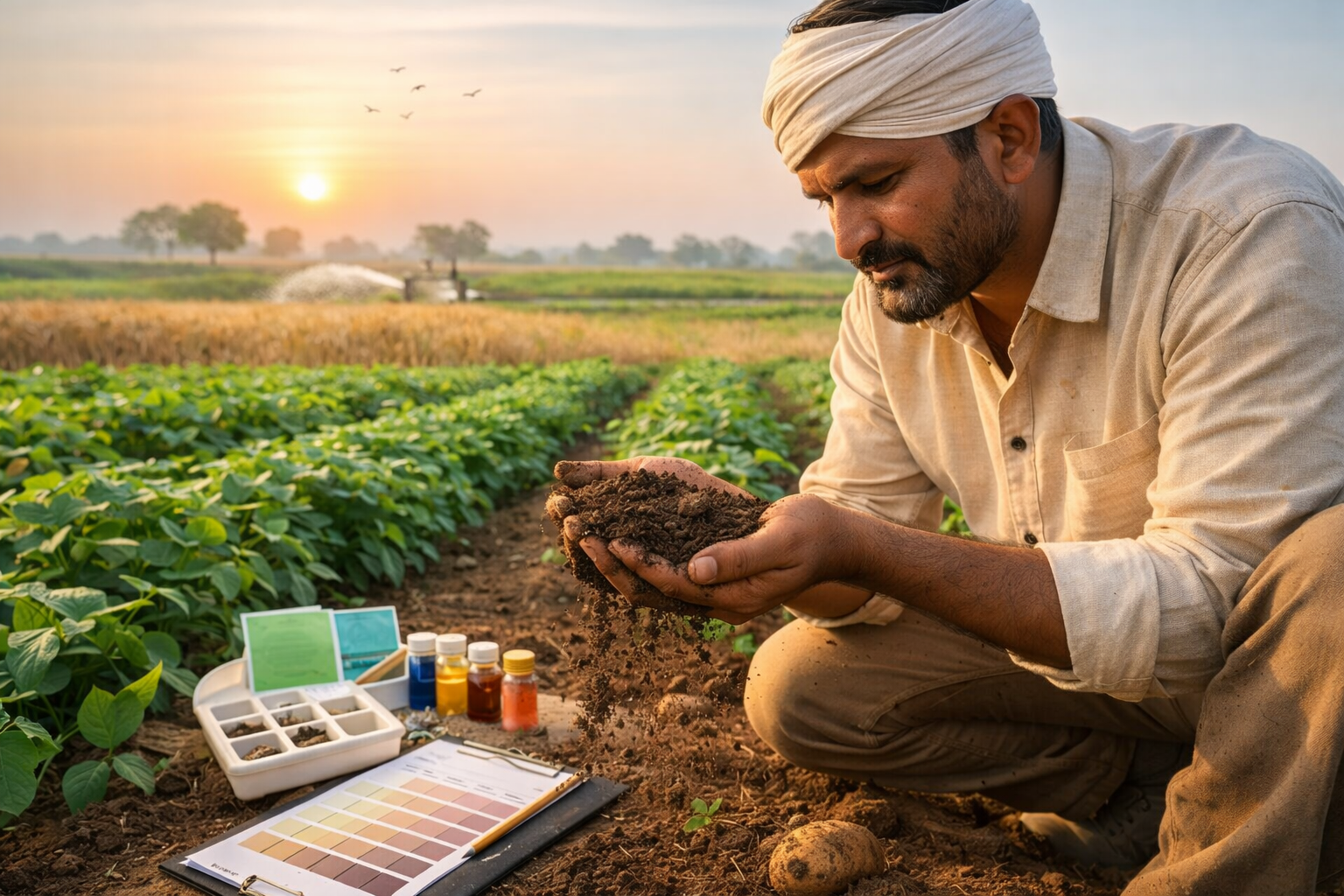
Soil is the foundation of agriculture. Healthy soil supports strong crop growth, improves yield, and ensures long-term farm sustainability. Poor soil health, on the other hand, leads to low productivity, higher input costs, and crop failure. Understanding and maintaining soil health is essential for successful farming.
1. What Is Soil Health?
Soil health refers to the soil’s ability to function as a living system that supports plant growth, stores nutrients and water, and maintains environmental balance. Healthy soil contains the right mix of minerals, organic matter, air, water, and beneficial microorganisms.
Good soil is not just dirt—it is a living ecosystem that supports crops throughout their growth cycle.
2. Why Soil Health Is Important for Farming
Healthy soil plays a crucial role in agricultural productivity. It directly affects crop yield, quality, and resistance to stress.
Key Benefits of Healthy Soil:
- Better root development
- Improved water retention
- Efficient nutrient availability
- Reduced soil erosion
- Higher and stable crop yield
Farmers who maintain soil health experience fewer crop problems and lower input costs over time.
3. Types of Soil and Their Agricultural Importance
Different soil types have different properties and crop suitability.
- Sandy Soil: Drains quickly but holds fewer nutrients
- Clay Soil: Rich in nutrients but poor drainage
- Loamy Soil: Best for farming due to balanced texture
- Silty Soil: Fertile but prone to erosion
Understanding soil type helps farmers choose the right crops and management practices.
4. Role of Organic Matter in Soil Health
Organic matter improves soil structure and fertility. It includes crop residues, compost, farmyard manure, and green manure.
Benefits of Organic Matter:
- Improves soil aeration
- Enhances water-holding capacity
- Supports beneficial microorganisms
- Increases nutrient availability
Regular addition of organic matter keeps soil fertile and productive.
5. Soil Testing: A Key Step for Healthy Farming
Soil testing helps farmers understand nutrient levels, pH value, and deficiencies. It prevents unnecessary fertilizer use and saves money.
Advantages of Soil Testing:
- Identifies nutrient imbalance
- Guides proper fertilizer application
- Improves crop response
- Prevents soil degradation
Testing soil at least once every 2–3 years is recommended for better farm planning.